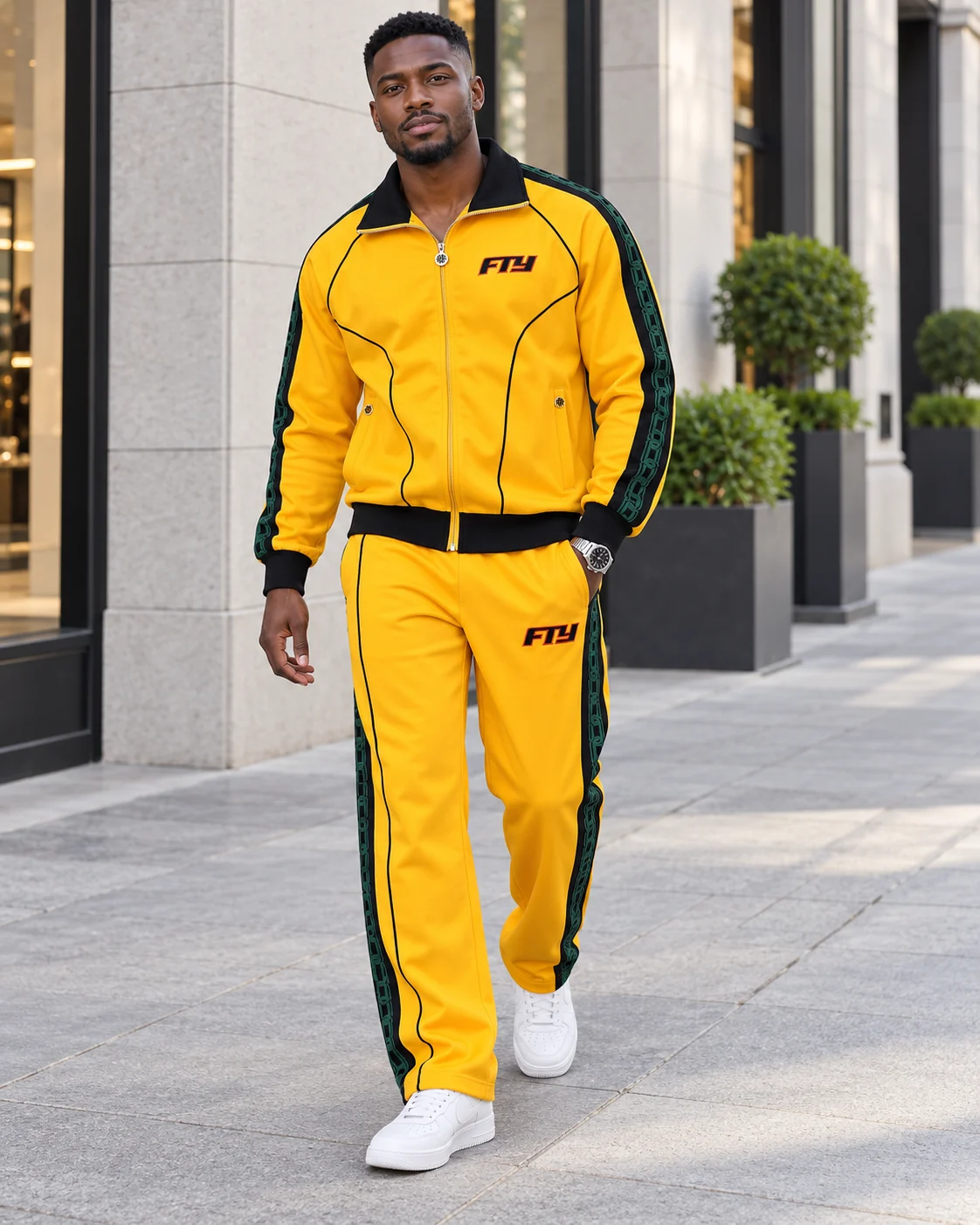

A South Africa tracksuit assortment is not simply a list of attractive catalog photos. A retailer needs to decide which men’s set fits a specific price position, which measurements suit its customers, how many colors to carry and how the sizes will be replenished. One large mixed request can conceal four different product decisions. AfriWear Supply can discuss current options through its Guangzhou factory-supported supply process; product availability, order conditions and timing must be confirmed for the selected styles.
Quick Answer
Begin with the retailer’s intended customer and display space. Shortlist two or three current tracksuit cuts, compare their actual garment measurements and fabric descriptions, then assign colors and XL 2XL 3XL quantities only to the cuts that remain. Ask for a quote by style, not a single price for an unspecified assortment.
A first assortment is an experiment with recorded assumptions, not proof that one style will sell nationwide. Browse men’s sportswear options and send the shortlist on WhatsApp.
At a Glance: Assortment Decisions
- Channel: Identify the receiving retailer, distributor or online assortment.
- Style: Give each tracksuit cut a separate code and image.
- Fit: Compare top and trouser measurements, not size names alone.
- Color: Allocate shades within each style instead of across the whole order.
- Size: Build an XL 2XL 3XL matrix from actual shop evidence.
- Reorder: Record which products can be checked again later.

Why Assortment Design Matters to a Retail Buyer
The buyer is managing display space and cash across styles. Two similar sets may compete for the same customer, while one less decorative cut may fill a genuine gap. A style list should state what each option contributes: a different silhouette, fabric hand, trim or intended price position. These are questions for the selected products, not claims about South African demand.
Separating variables also improves learning. If every set differs in cut, fabric, color and size mix, weak sales will not reveal what should change. Keep a concise decision log beside the order sheet: why each style was selected, which alternative was rejected and what the shop will observe after receipt.
Tracksuit Options to Compare
A simple matching set
Compare the top-to-trouser proportion, zipper and pocket layout. This can be a useful baseline when the store wants an easy-to-explain silhouette. Request current product images and measurements.
A contrast-panel set
Check panel placement, seam alignment and whether the contrast changes the cost or color minimum. A photo of one colorway does not define every proposed shade.
A heavier or lighter fabric option
Do not infer weight or climate suitability from appearance. Ask for composition, fabric weight if available, hand-feel evidence and care guidance for the actual style.
A second fit profile
Compare the same body measurements across cuts. A second fit has value only if the retailer can explain which customers it serves.
How to Choose an Initial Assortment
Ask seven supplier questions before assigning quantities:
- Which current product code and image identify each proposed cut?
- What are the top and trouser measurements in each requested size?
- How do fabric and trim differ between these cuts?
- Which colorways belong to each exact style?
- How do MOQ and price apply when two styles share one order?
- Can the packing list preserve style-color-size identification?
- What current timing and quote validity apply to each line?

Size and Specification Planning by Style
Keep seven data points for every selected set:
- Style code and approved front and back views.
- Top chest, length and sleeve measurements.
- Trouser waist method, hip, rise and inseam.
- Fabric composition and weight if confirmed for this style.
- Trim, zipper, pocket and cuff details.
- XL 2XL 3XL quantities by style and color.
- Any buyer labeling or packing instruction.
The same XL label can represent different measurements in two cuts. Compare garment data against the retailer’s own fit feedback before calling either option suitable.
Color and Style Selection Principles
- Choose a distinct reason for each additional cut.
- Limit shades until the retailer can manage the matrix.
- Keep body color and contrast-panel color separate in records.
- Use numbered photos or samples for shade approval.
- Change one major assortment variable at a time when possible.
Quality Checks for an Assortment Order
Cut identity
Match received sets to the approved style code, not a similar marketing name.
Top and trouser pairing
Check that the two garments belong to the same set and size designation.
Fit consistency
Compare agreed points of measure across representative pieces, with tolerances agreed for the order.
Color and trim
Review shade, panel and zipper details against the approved reference under sensible lighting.
Assortment packing
Reconcile style-color-size quantities with the packing list and carton identifiers. The GS1 logistic-label guidance is background on clear identification, not a claim of GS1 use.
Ready Stock or Custom Assortment?
Confirm seven order-specific items:
- Which exact styles and colors are currently available.
- Whether new colorways or trim are feasible.
- Whether measurement changes would require a different pattern.
- What samples or current photos can support approval.
- How MOQ applies to each style-color line.
- Whether mixed cartons are possible for the proposed matrix.
- Current quote validity, handoff point and timing.
Do not treat a broad catalog as a promise of immediate stock or repeatability.

What to Include in a South Africa Tracksuit Inquiry
Send nine fields:
- South Africa destination city and buying channel.
- Store or distributor customer profile.
- Current style codes and numbered images.
- Desired differences between the selected cuts.
- Required fabric and trim details.
- Top and trouser measurement questions.
- Color-by-size quantity matrix for each style.
- Carton separation and labeling preference.
- MOQ, quote validity, payment and handoff questions.
Hello AfriWear Supply. We are planning a South Africa men’s tracksuit assortment for the stated channel. Please compare the attached style codes on actual top and trouser measurements, fabric and trim, available colors and current order conditions. Our provisional color-by-size quantities are attached per style. Please identify substitutions and quote each approved line with packing, validity and handoff terms before we make a selection.
Send the assortment matrix on WhatsApp and retain the response with the approved order version.
South Africa Tracksuit Wholesale Checklist
- Define the store’s intended customer.
- Assign one role to each shortlisted style.
- Save current product codes and photos.
- Compare top and trouser measurements.
- Confirm fabric and trim for each cut.
- Separate color quantities by style.
- Base XL 2XL 3XL allocations on shop evidence.
- Check MOQ by line, not by order total only.
- Request substitution approval in writing.
- Record price validity and timing.
- Agree carton identification.
- Save the final assortment matrix for reorder review.
Frequently Asked Questions
How many tracksuit styles should a first assortment contain?
There is no universal number. Choose only the cuts the retailer can distinguish, display and measure. Feasibility still depends on current MOQ and product conditions.
Can different cuts share one size ratio?
They can share a proposed ratio, but measurements and customer fit feedback may justify different allocations. Check both garments for each cut.
Is a contrast-panel style automatically more valuable?
No. Its role depends on the store’s customer, approved construction and quoted cost. Avoid adding it merely to increase variety.
Can one carton contain several styles?
Ask whether this is possible for the order. If approved, require a carton-level matrix and readable inner identification.
How should a retailer decide what to reorder?
Keep the initial style-color-size matrix and observe sales and returns by line. One store’s result should not be presented as a national market rule.
Request the Current Catalog
Review the current product range and ask for the shortlisted tracksuit details on WhatsApp. Use the South Africa market page for destination context. Verify every style and condition against the specific quote.
Related Articles / You May Also Like


