Men’s Casual Suit Styles Every African Retailer Should Stock in 2026: Factory Direct from Guangzhou

非洲男装针织裤 (3)

Quick Answer

The men’s casual suit is one of the most consistently profitable items in African retail apparel. Unlike fashion trends that come and go, the demand for professional-but-relaxed men’s clothing in Africa is structural, driven by young urban professionals, growing formal-casual workplace cultures, and a middle class that wants clothing that looks sharp without being stiff. For African retailers, understanding wholesale apparel sourcing for men’s casual suits is one of the highest-return skills you can build.

A good wholesale order should be based on the destination country, climate, fabric weight, size measurements, style mix, color palette and reorder plan. Before placing a bulk order, request the current catalog, sample details, exact size chart, MOQ, available colors, packing information and shipping quotation. Factory-direct pricing from Guangzhou usually offers a 30-50% margin advantage compared to local distributors.

Browse AfriWear Supply’s current men’s casual suit collection or request the latest wholesale catalog on WhatsApp.

Men’s Casual Suits at a Glance

  • Product type: Two-piece matching set, jacket and trousers
  • Common fabric: Polyester-viscose blend, cotton-polyester blend, polyester-rayon blend
  • Typical fabric weight: 220-320 GSM for year-round wear
  • Size range: XL 2XL 3XL with elastic waist and relaxed fit (additional sizes available on request)
  • MOQ range: 50-100 pieces for ready stock, 300+ for custom branding
  • Lead time: 7-15 days for ready stock, 25-35 days for custom production
  • Shipping coverage: Sea and air to all 54 African countries
  • Best first step: Confirm a current sample, fabric specification and measurement chart
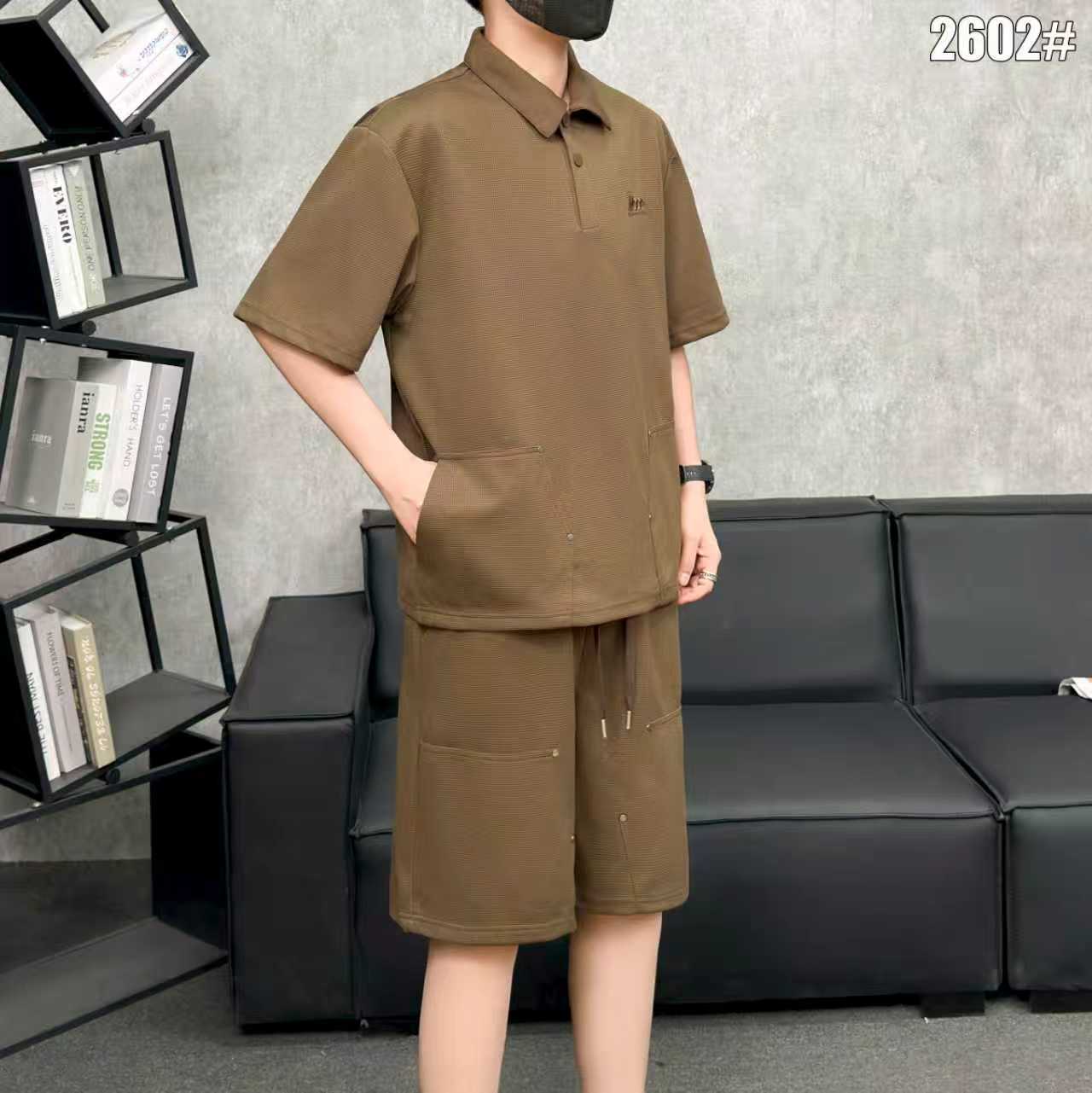
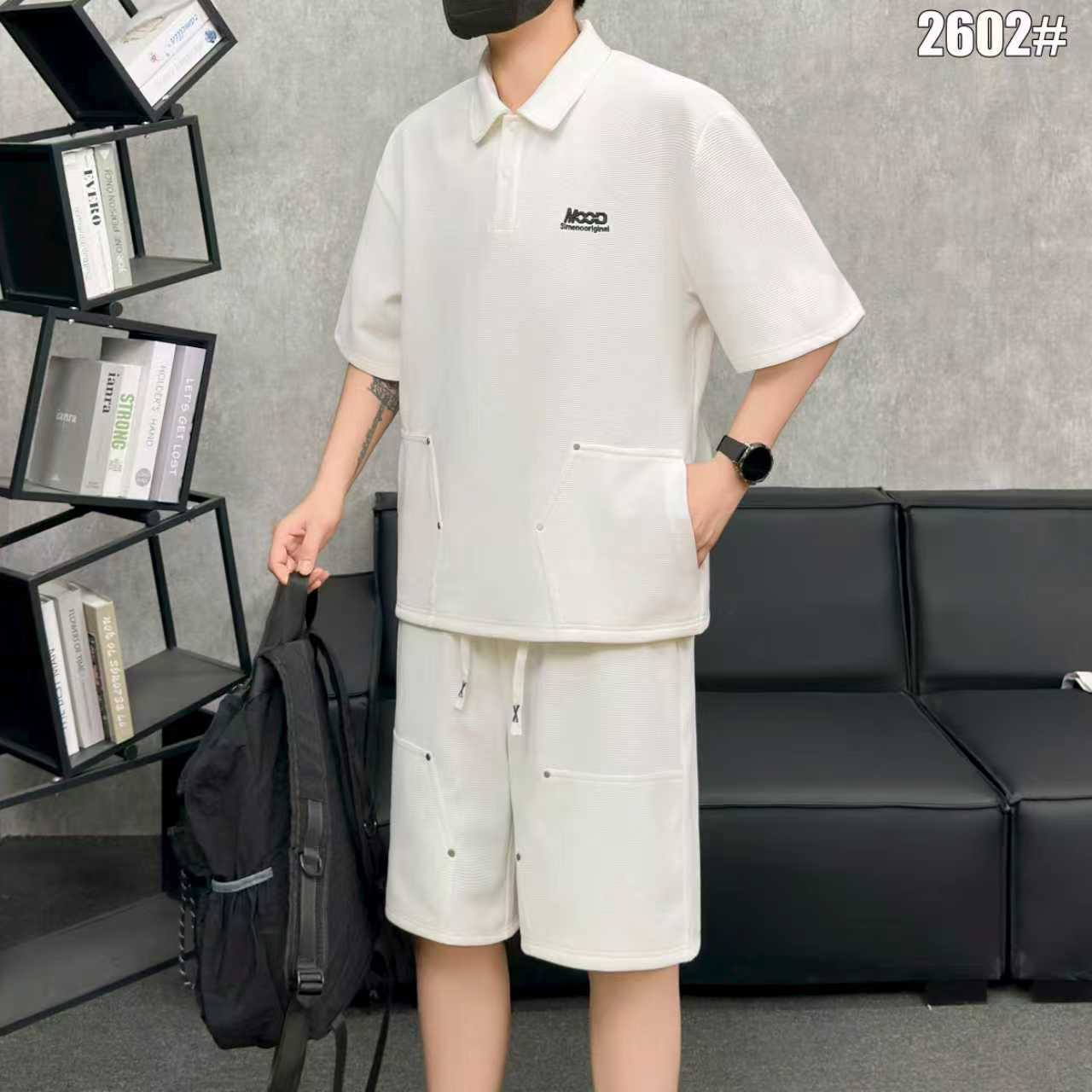
Men's casual suit sample from Guangzhou factory
Men’s casual suit sample from Guangzhou factory

Why Men’s Casual Suits Dominate African Men’s Fashion

Three structural factors make casual suits a dependable category for African retailers:

  • Workplace casualization. More African workplaces now accept smart-casual dress codes. Men want clothing that looks professional but feels comfortable for a full working day. A well-tailored casual suit meets that need better than a stiff formal suit or a relaxed t-shirt and jeans.
  • Occasion versatility. A casual suit works for the office, weekend social events, religious gatherings, family dinners and travel. That range of use drives higher unit turnover than single-occasion formal wear.
  • Margin ladder. Casual suits wholesale at $5-8 per unit and retail at $20-35 in Lagos, Nairobi or Johannesburg, a $12-27 gross margin per unit. That margin is wider than most casual wear categories, which makes casual suits a priority for retailers who want to grow annual gross profit.

For an African retailer, this means casual suits are not a side category but a deliberate core line. The buyer’s job is to confirm the GSM, lining, colorfastness and construction before paying for the bulk.

Men’s Casual Suit Styles That Are Selling Right Now

The Two-Piece Casual Suit

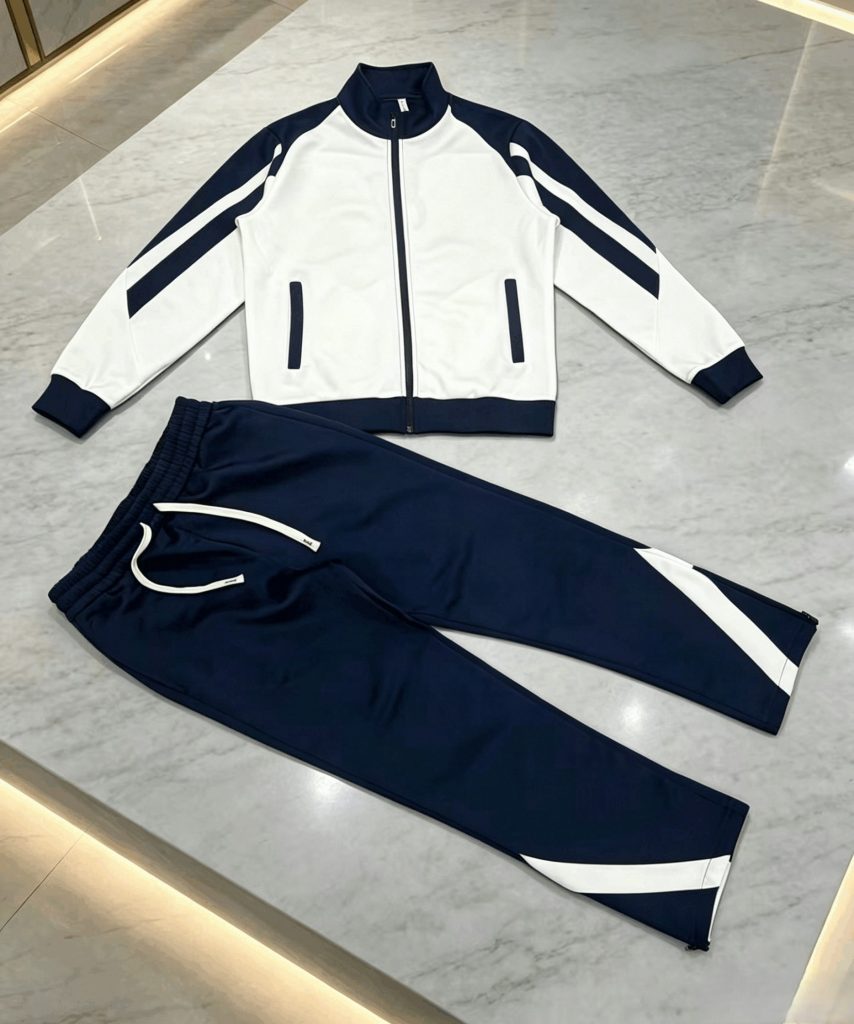
The classic two-piece casual suit combines a single-breasted jacket with side pockets and matching flat-front or pleated trousers with an elastic waistband. It is the broadest-selling style and the safest category for a first order. Confirm the exact fabric composition, GSM weight and lining specification before approval.

The Leisure Suit

The leisure suit uses a more relaxed jacket construction with patch pockets and a softer shoulder. It sells well in markets where customers prefer comfort over formality. Before ordering, confirm the shoulder construction, lining type and whether the jacket has functional buttonholes on the sleeve.

The Casual Blazer Set

The casual blazer set pairs a textured blazer with matching trousers. It works for retailers who want to differentiate from the basic two-piece. Confirm the texture pattern, button material and trouser break before approval.

The Seasonal Lightweight Suit

The seasonal lightweight suit uses thinner fabrics (around 200-260 GSM) and may suit warm-weather markets, indoor events and travel. Important details include breathability, drying speed and whether the fabric becomes transparent under strong light. Do not describe a lightweight suit as wrinkle-free unless the supplier can provide supporting fabric specification.

How to Choose Fabric for Wholesale Casual Suits

Fabric quality drives comfort, durability, drape and price. Before committing to a supplier, ask these questions:

  1. What is the exact fabric composition for the jacket and the trousers?
  2. What is the GSM weight of each piece?
  3. Does the fabric have stretch, and how much?
  4. Is the lining fixed or half-lined?
  5. Has the color been tested for washing, rubbing and light?
  6. Does the fabric pill after repeated wearing?
  7. Will the bulk production use the same material as the approved sample?

For warmer African markets, lighter and more breathable fabrics may be easier to sell. For cooler seasons or higher-altitude regions, heavier fabrics with full lining create a stronger value proposition. The correct answer depends on the country, city, season and customer group.

Casual suit fabric reference for wholesale buyers

Size Planning for Casual Suits

Ordering Asian-sized stock is the most expensive mistake in sourcing casual suits for Africa. When a customer in Douala buys an XXL that fits like a Chinese XL, they do not come back. Always ask the supplier for actual measurements in centimeters. African customers expect a relaxed fit, but they also expect that an XL is genuinely larger than an L.

Request a size chart that includes:

  • Jacket chest width (laid flat)
  • Jacket length (shoulder to hem)
  • Sleeve length
  • Shoulder width
  • Trouser waist (before and after stretch)
  • Trouser length
  • Thigh width
  • Leg opening

A practical first order for an African retailer usually starts with XL 2XL 3XL covering 70-80% of the size mix. Additional sizes are available on request. Confirm the actual measurements for each size label before approval. Do not assume that one factory’s XL matches another factory’s XL.

Color and Style Selection for Casual Suit Wholesale

A first order should have enough variety to attract customers, but not so many options that inventory becomes fragmented. A practical selection can include:

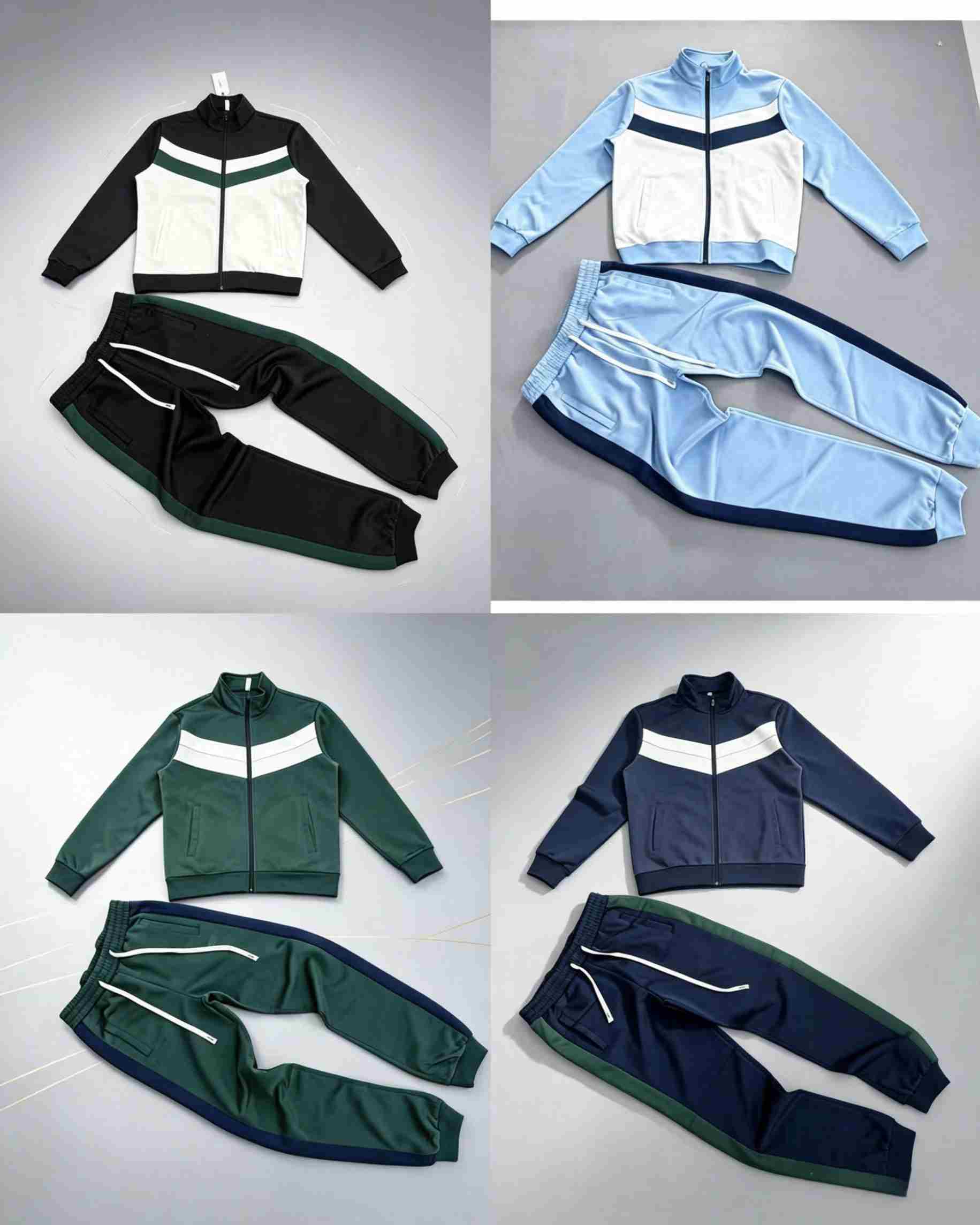
  • Neutral colors (black, charcoal, navy) for core everyday demand
  • One or two mid-tones (burgundy, olive, dark brown) for variety
  • A classic two-piece style without extra details
  • A style with a textured fabric or contrast trim
  • A lightweight option where the climate requires it

When contacting a supplier, use item numbers and list the quantity for each color and size. This is more precise than saying “send popular colors.” The final color mix should be confirmed against actual stock and your own customer data.

Quality Checks Before Bulk Production

Inspect the Stitching and Seams

Check the shoulder seam, side seam, sleeve join, trouser rise and buttonhole stitching. Loose threads or skipped stitches are early signs of a weak production run. Reinforced bar tacks at stress points are a good sign of a serious factory.

Check the Lining and Interlining

Open the jacket and feel the inside. The lining should sit smoothly without bubbling or pulling. Patches of uneven interlining indicate inconsistent production. Compare the sample with the bulk lot when goods arrive.

Test the Buttons and Buttonholes

Pull each button to confirm it is anchored properly. For buttonholes, check that the stitching is even and the cut is clean. A button that falls off in the first week cannot be resold at the same price.

Measure Both Pieces Against the Size Chart

Compare the sample with the approved size chart. Measure both pieces and check whether the cuffs, hem and trouser legs are even. Small differences can become more visible when the garment is worn, especially in formal-leaning styles.

Test Pressing and Drape

Hang the sample and observe how it drapes after a few hours. A good casual suit returns to shape without heavy pressing. A poor fabric retains wrinkles even after steaming.

Confirm the Packing List

Before shipment, confirm item number, color, size, quantity per polybag, pieces per carton, total carton count and carton marks. Clear packing information helps reduce receiving mistakes at the destination warehouse.

Casual suit bulk inspection reference from Guangzhou factory

Ready Stock or Custom Production?

Ready stock is usually suitable when you want to test a product or need faster dispatch. You choose from current designs, sizes and colors, then confirm the available quantity. Custom production may allow changes to:

  • Logo embroidery or print on the jacket lining
  • Woven labels and care labels
  • Hang tags and polybags
  • Fabric composition
  • Color and color matching
  • Fit adjustments
  • Button material and pocket details

Customization can change the MOQ, unit price and lead time. Send all requirements before requesting a final quotation. Do not assume that the terms for ready stock will apply to a custom order.

What to Include in a Casual Suit Inquiry

A complete inquiry helps the supplier respond with useful information. Include:

  • Destination country and city
  • Product or item number
  • Estimated quantity per size and per color
  • Required colors
  • Required sizes
  • Ready stock or custom production
  • Logo or packaging requirements
  • Target delivery date
  • Preferred shipping method

You can use this message:

Hello AfriWear Supply, I am interested in men’s casual suit styles for the African market. My destination is [country and city]. I need approximately [quantity] sets in XL 2XL 3XL. Please confirm the current item numbers, MOQ, wholesale price, size chart, packing details, dispatch or production time, and shipping options.

Casual Suit Wholesale Checklist

Before paying for an order, confirm:

  • Product sample approved and labeled for reference
  • Fabric composition and GSM weight for both pieces
  • Lining type and interlining confirmed
  • Size measurements for jacket and trousers
  • Color list with reference
  • Quantity by color and size
  • MOQ per style and per color
  • Unit price and currency
  • Packing quantity per carton
  • Production or dispatch time
  • Shipping method and destination cost
  • Inspection arrangement
  • Payment terms
  • Return or quality-claim process

Frequently Asked Questions

What styles of men’s casual suits sell best in Africa?

Two-piece matching sets, leisure suits and casual blazer sets are the broadest-selling categories. Confirm the destination market’s preference before placing the order, because some markets lean toward formal-leaning cuts while others prefer relaxed leisure construction.

What sizes do Guangzhou factories typically stock?

Most Guangzhou factories stock XL 2XL 3XL as the core sizes for African retailers. Additional sizes are available on request. Always confirm the actual measurements in centimeters before placing the order, because Asian sizing and African sizing are not the same.

What is the typical MOQ for casual suits?

Ready stock can start at 50-100 pieces per style per color. Custom-branded sets usually start at 300 pieces per design. Always confirm the MOQ in writing before placing the order.

How long does delivery take to African cities?

Sea shipping to West Africa typically takes 25-40 days. Air freight is faster but more expensive. Confirm the route, transit time and destination cost for the specific city before approving the shipping method.

Can I add my own logo to casual suits?

Custom branding, including logo embroidery on the jacket lining, custom labels and packaging, is usually available at MOQs of 300 pieces per design. Ask the supplier to confirm the artwork file format, additional cost and extended lead time before approval.

Request the Current Catalog

The strongest wholesale decision comes from matching a real product specification with a real customer group. Start with a sample, confirm the measurements and make the first order easy to check.

View the current AfriWear Supply product collection or request the latest catalog and wholesale quotation on WhatsApp.