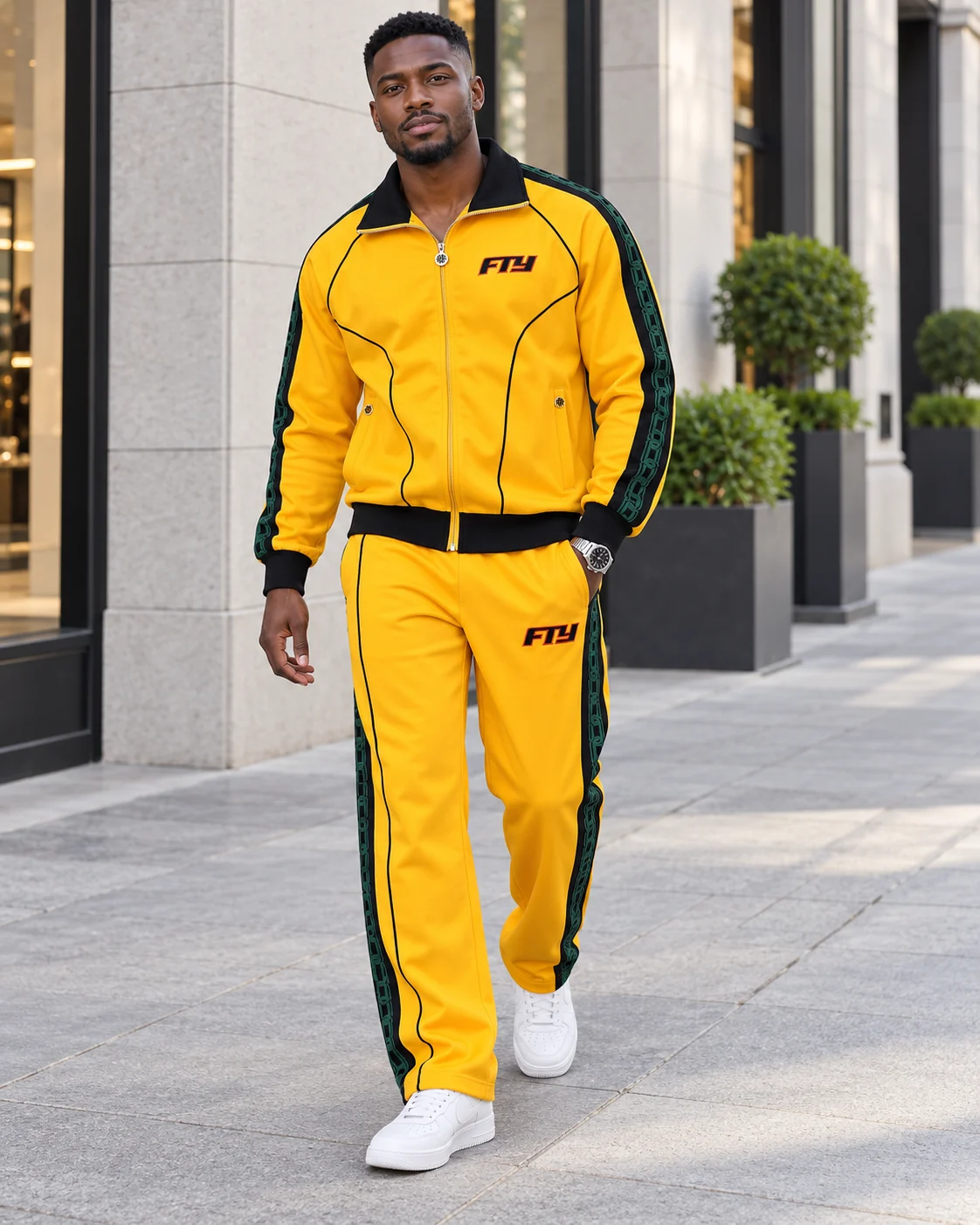

A men’s tracksuits bulk order can look straightforward until quantities move between messages, spreadsheets, and packing instructions. A total number of sets does not tell the packing team which colours belong in each carton or whether separate tops and trousers form complete sets. The buying task is to turn your assortment plan into one identifiable order and one checkable packing instruction.
Quick Answer
Use a separate order line for every style, colour, and size combination. State quantities in complete sets and define the components of one set. Reconcile line totals with style totals and the overall order. Then assign carton references and packing rules, keeping planned carton contents separate from the final packing list confirmed after packing.

Give Every Variant a Stable Identity
Start with a buyer order reference and a version date. Each style needs a stable reference linked to an agreed image or specification. Write the colour reference consistently; avoid switching between a descriptive name and an unexplained code. If the same style has several variants, record the details that distinguish them so a photograph does not have to carry the entire instruction.
Use the supplier’s confirmed size chart alongside your requested labels. XL, 2XL, and 3XL may be buyer requirements, but they do not confirm measurements or fit. Resolve that relationship before finalising quantities. If a requested size is unavailable, record the proposed alternative as pending rather than allowing the quantity to move silently to another size.

Define the Unit Before Adding the Totals
Write what one set includes and how the components should match. State whether the top and trousers must carry the same size label or follow an agreed pairing. Count complete sets separately from individual garment pieces. This prevents an order for sets from being interpreted as a combined count of tops and trousers.
- Order line reference and style reference.
- Confirmed colour identifier and requested size label.
- Quantity of complete sets for that exact combination.
- Components and matching rules for each set.
- Required labels, packaging instructions, and unresolved points.
- Approval status and the date of the latest revision.
Check the arithmetic in both directions. Add the variant lines to reach each style total, then add the style totals to reach the order total. Also check whether component counts match the set definition. Ask the contact to confirm the same totals in writing, rather than replying only with an overall acknowledgement.
Choose Carton Rules That Fit Receiving Work
Decide whether cartons should contain one variant, several sizes of one style, or an agreed mixed assortment. The suitable approach depends on how you will receive, count, and distribute the goods. Ask what packing arrangements are possible before making a final instruction. Do not assume that a preferred arrangement is available or included in the quoted terms.
For each planned carton, request a carton reference and an itemised contents record. If cartons contain mixed variants, the record should identify the quantity of each variant. If complete sets are packed together, say so explicitly. Keep destination-specific separation clear when different parts of the order will go to different receiving points.
Control Changes Between Planning and Dispatch
Mark early carton allocations as a packing plan. Actual carton counts, dimensions, and weights should be confirmed after packing; they should not be guessed from the garment total. Ask the relevant contact which shipment and receiving documents are needed for the intended route, and check that descriptions and quantities agree across the final records.
If quantities change, update the affected line and all dependent totals, then issue a new version. Record whether the previous version is superseded. Before dispatch, reconcile the confirmed packing list against the approved order and ask about every difference. A last-minute substitution needs explicit agreement even when the overall set count stays unchanged.
Use the enquiry FAQ as a starting point for questions, then supply the order-specific details required to discuss packing and delivery arrangements.

Frequently Asked Questions
Can one carton contain different sizes?
It can be requested, subject to confirmation. Specify the size breakdown and ask for a contents record that lets your receiving team check each variant.
Is the order quantity enough to calculate freight?
No. The transport assessment also needs confirmed packing details and shipment requirements. Request the relevant information instead of estimating from the set count alone.
What should happen when a colour cannot be supplied?
Keep the affected quantity unresolved until you approve a substitution, revised quantity, or other arrangement. Update both the order and packing plan afterward.
Send an Order Matrix for Review
Contact AfriWear Supply as your Guangzhou sourcing contact through WhatsApp. Share style references, colour and size quantities, set definitions, destination, and proposed carton rules. Request confirmation of style-specific MOQ, commercial terms, and packing feasibility before treating the plan as an accepted order.
Related Articles / You May Also Like


