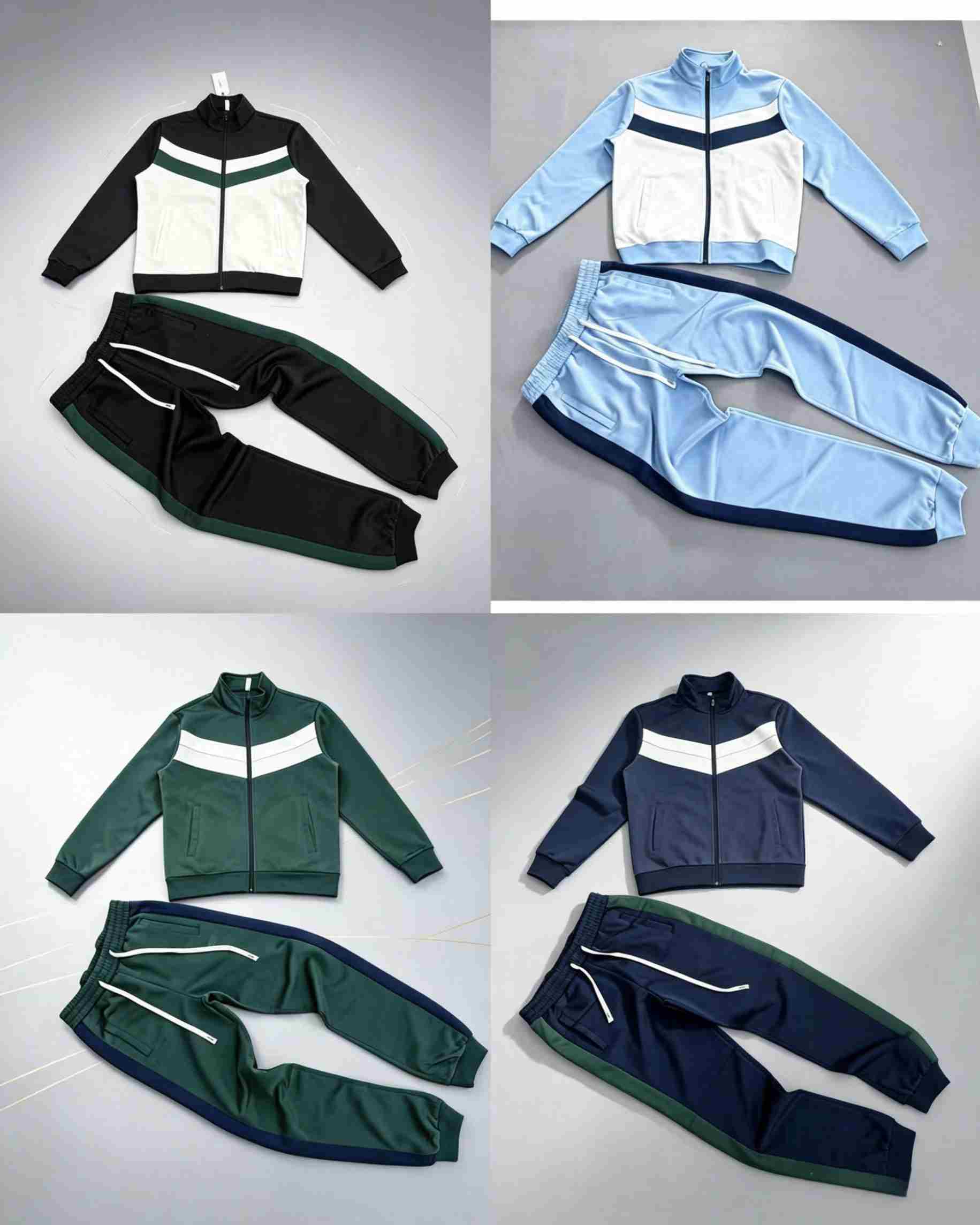
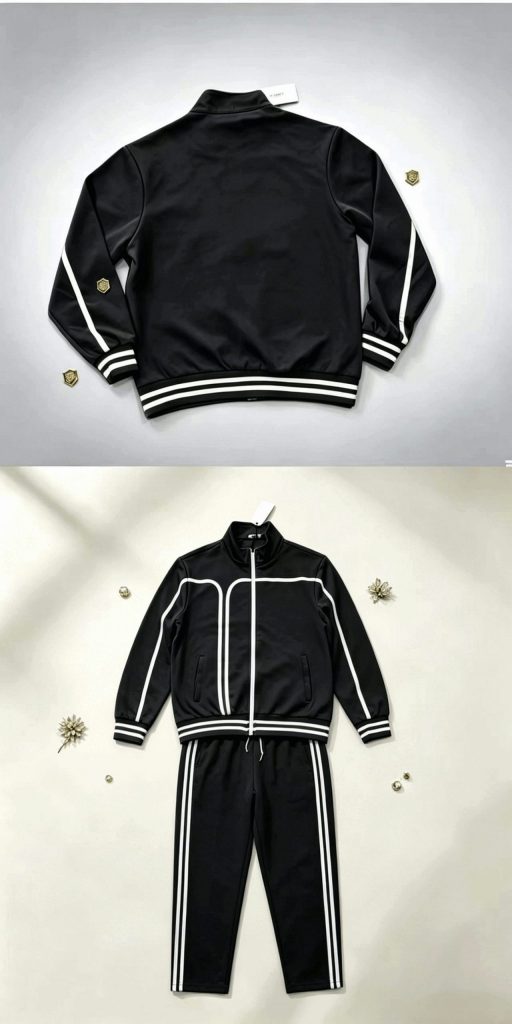
Quick Answer
African clothing retailers who source from China face a structural choice: buy directly from a factory, or buy through a trading agent who aggregates across factories. Each approach has real advantages and real trade-offs. The best approach depends on the buyer’s order size, product mix, language capability and time available for verification.
Factory-direct sourcing from Guangzhou offers the lowest unit cost and the most direct quality control. Trading agent sourcing offers broader product range and lower verification effort. Most African retailers benefit from a hybrid approach: factory direct for their core volume lines, trading agent for specialty or smaller-quantity items.
Browse AfriWear Supply’s current collection or request the latest wholesale catalog on WhatsApp.
Factory Direct vs Agent Sourcing at a Glance
- Factory direct: Lowest unit cost, most direct quality control, narrower product range
- Trading agent: Higher unit cost, broader product range, less verification effort
- Best fit for factory direct: Core volume lines, established relationships, larger MOQs
- Best fit for trading agent: Mixed product orders, smaller per-line quantities, first-time buyers
- Hybrid approach: Factory direct for core lines + trading agent for specialty items
- Shipping coverage: Both approaches support sea and air freight to all 54 African countries
- Best first step: Confirm a current sample, fabric specification and written quotation

What Factory Direct Sourcing Means
Factory direct sourcing means buying finished garments directly from the manufacturer that produces them. The buyer communicates with the factory’s sales team, places the order, inspects the goods and arranges shipping. There is no intermediary between the buyer and the production line.
Advantages of Factory Direct
- Lowest unit cost. Removing the trading agent margin saves 10-25% on the factory price. For an order of 300 men’s casual suits at $5 factory price, that savings is $150-375.
- Direct quality control. The buyer communicates directly with the production team. Quality issues can be raised and resolved during production, not after the goods leave the factory.
- Customization flexibility. Logo embroidery, custom labels, custom fabric and packaging changes can be coordinated without going through an intermediary.
- Direct relationship. Long-term relationships with factories often lead to better pricing, priority production slots and access to new product lines.
Disadvantages of Factory Direct
- Narrower product range. A single factory typically specializes in 2-3 product categories. A men’s tracksuit factory may not produce denim. A denim factory may not produce polo shirts.
- Higher verification effort. The buyer must verify the factory’s legitimacy, inspect samples and arrange pre-shipment inspection themselves.
- Communication overhead. The buyer must coordinate with multiple factories if the order spans multiple product categories.
- Minimum order quantities. Most factories require 50-100 pieces per style per color for ready stock, and 300+ pieces for custom production.
What Agent Sourcing Means
Agent sourcing (also called trading agent sourcing) means buying through an intermediary who aggregates orders across multiple factories. The agent communicates with the buyer, places orders with multiple factories, coordinates quality inspection and consolidates shipping.
Advantages of Agent Sourcing
- Broader product range. A single agent can source men’s casual suits, denim, tracksuits, knit tops and activewear from different specialized factories.
- Lower verification effort. The agent has already verified the factories. The buyer does not need to inspect each factory themselves.
- Consolidated shipping. The agent can combine orders from multiple factories into a single shipment, reducing per-unit freight cost.
- Lower per-line MOQs. The agent can place smaller orders with each factory while meeting their MOQs through aggregation.
Disadvantages of Agent Sourcing
- Higher unit cost. The agent’s margin adds 10-25% to the factory price.
- Less direct quality control. Quality issues must be raised through the agent, which adds time and complexity to resolution.
- Less customization flexibility. Custom branding and special fabric requests may be harder to coordinate through an agent.
- Dependence on the agent’s reliability. If the agent is unreliable or dishonest, the buyer has limited recourse.
When Factory Direct Wins
Factory direct sourcing wins in three specific scenarios:
Scenario 1: Core Volume Lines
If your order includes 500+ pieces of a single product category, factory direct sourcing delivers the lowest unit cost. A factory-direct order of 500 men’s casual suits at $5 per unit costs $2,500. The same order through an agent at 15% markup costs $2,875. The savings of $375 is meaningful for a high-volume line.
Your core men’s casual suit line carries the lowest possible landed cost through factory direct relationships.
Scenario 2: Custom Branding
If you need custom labels, logo embroidery, branded buttons or custom packaging, factory direct sourcing is the most reliable path. The buyer works directly with the factory’s customization team. Customization at MOQs of 300 pieces per design is more easily coordinated without an intermediary.
Scenario 3: Established Relationships
If you have an established relationship with a factory that you trust, factory direct sourcing is the obvious choice. Long-term relationships often lead to better pricing, priority production slots and access to new product lines.
When Agent Sourcing Wins
Agent sourcing wins in three specific scenarios:
Scenario 1: Mixed Product Orders
If your order includes men’s casual suits, denim and sportswear — products that come from different specialized factories — a trading agent who aggregates across factories may be more efficient than managing three separate manufacturer relationships.
Scenario 2: First-Time Buyers
If you are sourcing from China for the first time, an agent reduces verification effort. The agent has already verified the factories, established communication patterns and built quality control processes. The buyer can focus on selecting products and building their customer base.
Scenario 3: Smaller Per-Line Quantities
If your per-line order quantity is below the factory’s MOQ, an agent can aggregate orders with other buyers to meet the factory’s MOQ. This is particularly useful for African retailers entering their first bulk order.

How to Choose Fabric for Wholesale Clothing
Whether you choose factory direct or agent sourcing, fabric quality drives comfort, durability, color retention and price. Before committing to a supplier, ask these questions:
- What is the exact fabric composition?
- What is the GSM weight?
- Does the fabric stretch, and how much?
- Is the inside brushed, looped or smooth?
- Has the color been tested for washing, rubbing and light?
- Does the fabric pill after repeated washing?
- Will the bulk production use the same material as the approved sample?
For warmer African markets, lighter and more breathable fabrics may be easier to sell. For cooler seasons or higher-altitude regions, heavier fabrics with fleece or brushed lining create a stronger value proposition.
Size Planning for African Markets
Ordering Asian-sized stock is the most expensive mistake in sourcing apparel for Africa. When a customer in Douala buys an XXL that fits like a Chinese XL, they do not come back. Always ask the supplier for actual measurements in centimeters.
A practical first order for an African retailer usually starts with XL 2XL 3XL covering 70-80% of the size mix. Additional sizes are available on request. Confirm the actual measurements for each size label before approval. Do not assume that one factory’s XL matches another factory’s XL.
Quality Checks Before Bulk Production
Inspect the Stitching and Seams
Check the shoulder seam, side seam, sleeve join, trouser rise and buttonhole stitching. Loose threads or skipped stitches are early signs of a weak production run.
Test the Fabric
Feel the inside of the fabric. The brushing or fleece should be even across the entire panel. Patches of smooth fabric inside a “fleece-lined” garment indicate inconsistent production.
Measure Both Pieces Against the Size Chart
Compare the sample with the approved size chart. Measure both pieces and check whether the cuffs, hem and trouser legs are even.
Test Washing and Color Stability
Follow the supplier’s recommended washing instructions and record the result. Check shrinkage, color change, pilling and seam movement. Keep the approved sample for comparison when bulk goods arrive.
Confirm the Packing List
Before shipment, confirm item number, color, size, quantity per polybag, pieces per carton, total carton count and carton marks.

The Hybrid Approach: Best of Both Worlds
Most successful African retailers use a hybrid approach:
- Factory direct for core volume lines (men’s casual suits, basic tracksuits) where they have an established relationship and reorder consistently.
- Trading agent for specialty items (custom-branded products, smaller per-line quantities) where the aggregation benefit outweighs the markup.
This approach captures the lowest unit cost for high-volume lines while maintaining flexibility for specialty products.
What to Include in a Sourcing Inquiry
A complete inquiry helps the supplier respond with useful information. Include:
- Destination country and city
- Product or item number
- Estimated quantity per size and per color
- Required colors
- Required sizes
- Ready stock or custom production
- Logo or packaging requirements
- Target delivery date
- Preferred shipping method
- Specify whether you want factory direct or trading agent pricing
You can use this message:
Hello AfriWear Supply, I am comparing factory direct vs agent sourcing for clothing manufacturers suppliers for the African market. My destination is [country and city]. I need approximately [quantity] pieces in XL 2XL 3XL across [list of categories]. Please send your current catalog, item numbers, MOQ for both factory direct and consolidated pricing, size chart, packing details, dispatch or production time, and shipping options.
Factory Direct vs Agent Sourcing Checklist
Before committing to a sourcing approach, confirm:
- Order quantity by category identified
- Per-line MOQ checked against factory requirements
- Total landed cost calculated for both approaches
- Quality control plan defined (samples, pre-shipment inspection)
- Communication plan defined (WhatsApp, email, video calls)
- Payment terms agreed (T/T, LC)
- Shipping method agreed (FOB, CIF, DDP)
- Reference clients contacted
- Backup supplier identified in case of capacity issues
Frequently Asked Questions
What is the difference between factory direct and agent sourcing?
Factory direct sourcing means buying directly from the manufacturer. Agent sourcing means buying through an intermediary who aggregates orders across multiple factories. Factory direct offers lower unit cost; agent sourcing offers broader product range.
Which approach is better for first-time buyers?
Agent sourcing is generally better for first-time buyers because the agent has already verified the factories and established communication patterns. As the buyer’s order volume grows, they can transition core lines to factory direct.
What is the typical MOQ for factory direct sourcing?
Ready stock can start at 50-100 pieces per style per color. Custom-branded sets usually start at 300 pieces per design. Always confirm the MOQ in writing before placing the order.
How much does an agent add to the factory price?
A trading agent typically adds 10-25% to the factory price, depending on the product category, order volume and agent relationship. The markup covers the agent’s coordination, quality control and shipping consolidation services.
How do I verify a clothing manufacturer before placing an order?
Request product samples, a written quotation, a measurement chart and a reference client list. Confirm business license, export history and shipping coverage. A factory-direct supplier should be willing to share close-up photos, short videos and factory location details.
Request the Current Catalog
The strongest wholesale decision comes from matching a real product specification with a real customer group. Start with a sample, confirm the measurements and make the first order easy to check.
View the current AfriWear Supply product collection or request the latest catalog and wholesale quotation on WhatsApp.