Quick Answer
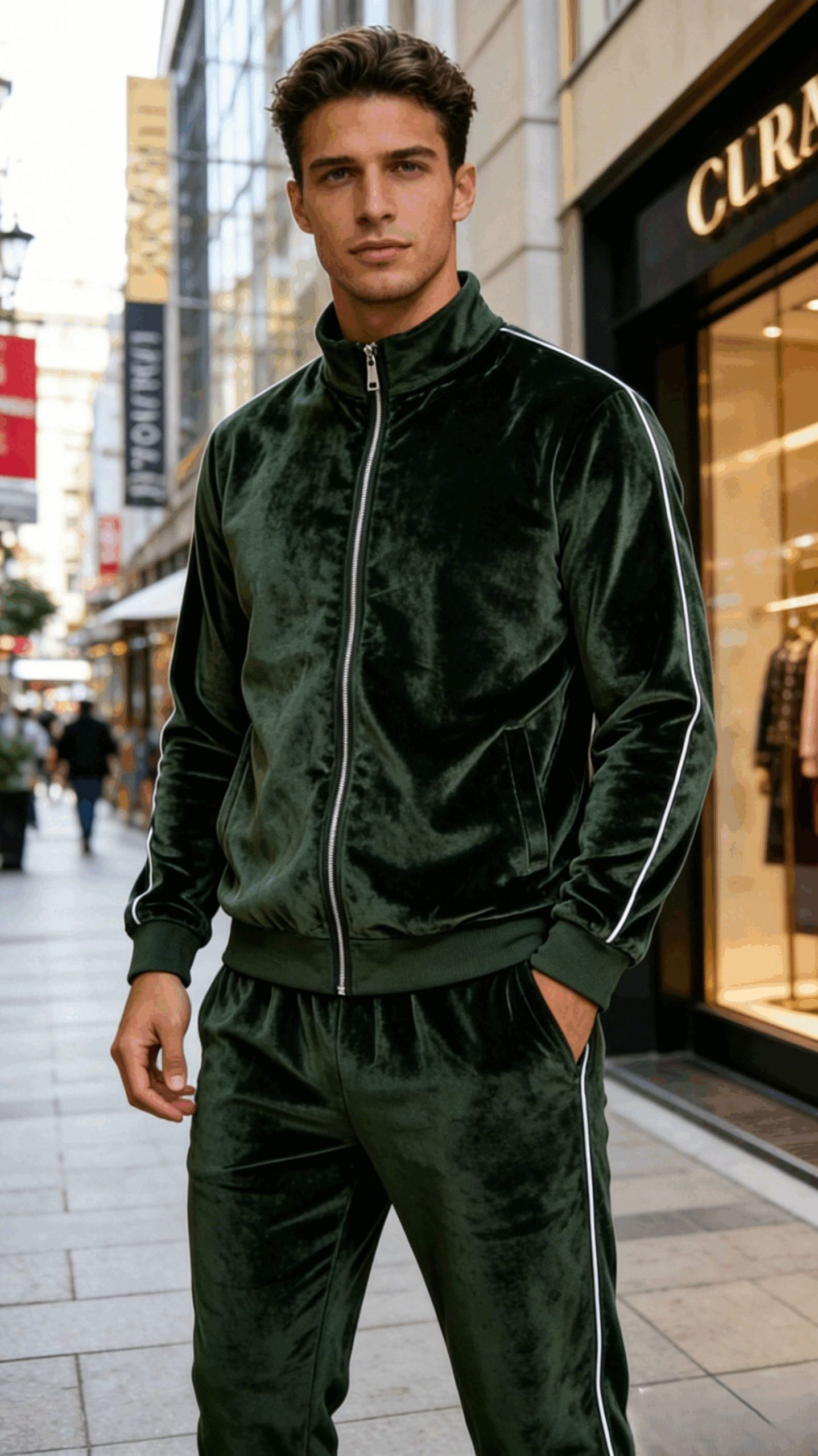
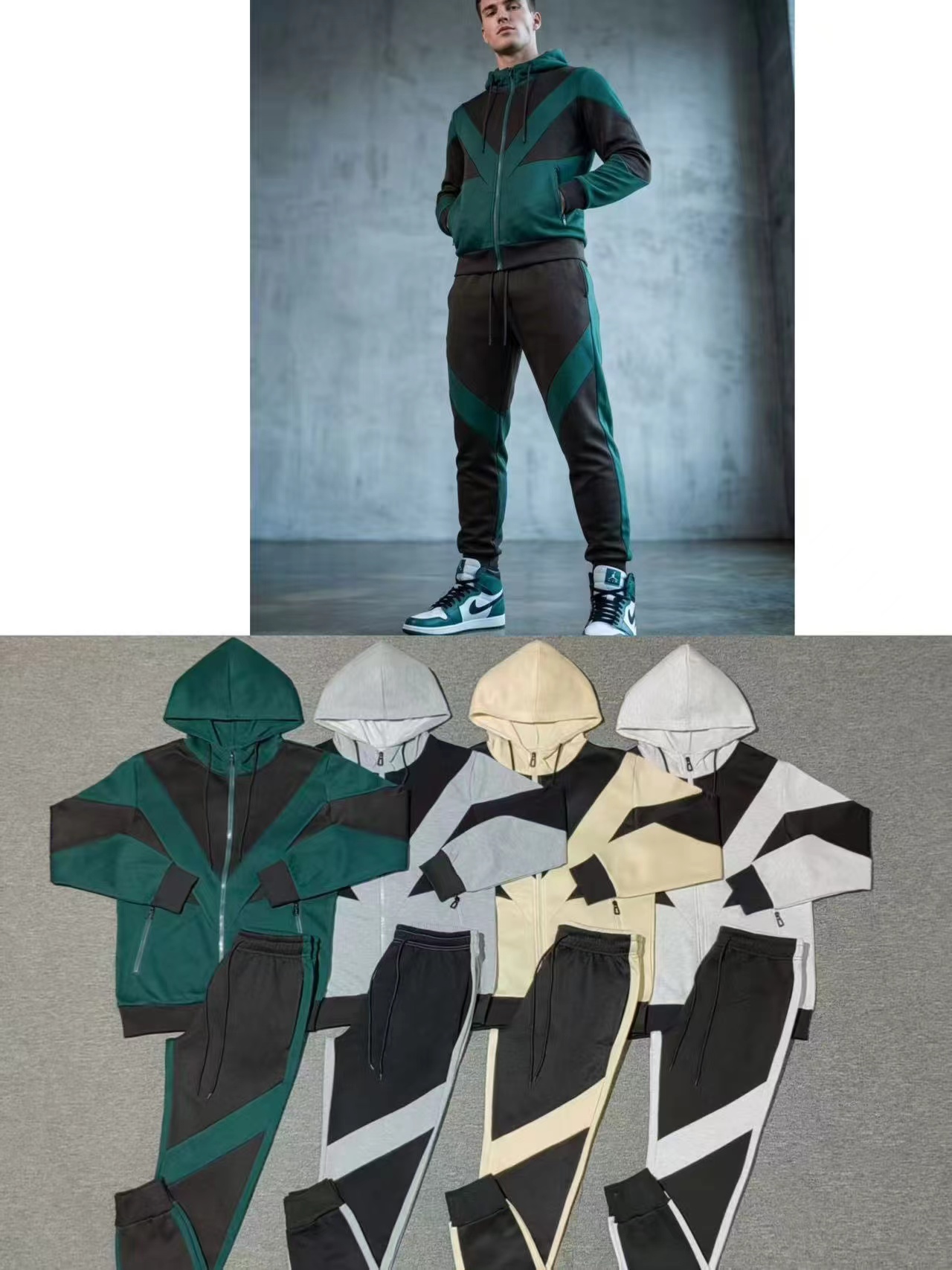
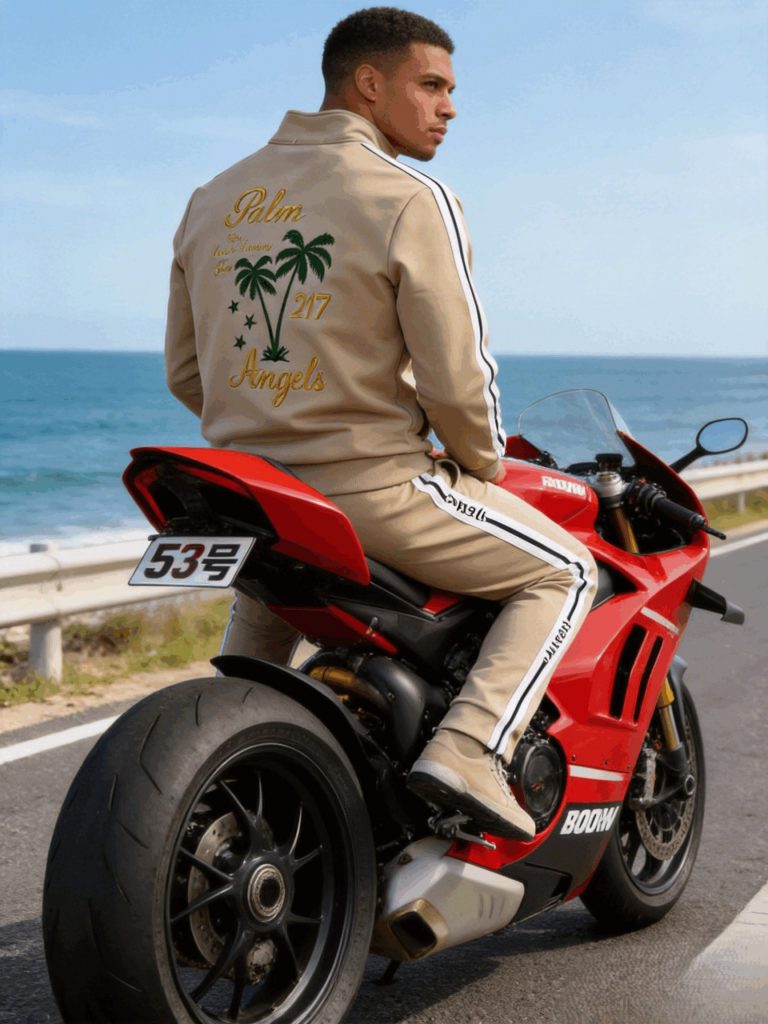
Heavy fabric winter men’s tracksuits are two-piece sets with a GSM weight typically between 280 and 380, often fleece-lined on the inside for cooler climates. African buyers in cities such as Lagos in harmattan season, Nairobi, Addis Ababa, Johannesburg in winter and Douala during cooler months can sell heavier tracksuits as a clear upgrade over lightweight sets.
A good wholesale order should be based on the destination climate, GSM weight, fleece or brushed lining, size measurements, color mix and reorder plan. Before placing a bulk order, request the current catalog, sample details, exact size chart, MOQ, available colors, packing information and shipping quotation. Do not rely on the word “winter” alone because suppliers use that label differently.
Browse AfriWear Supply’s current winter tracksuit collection or request the latest wholesale catalog on WhatsApp.
Heavy Fabric Winter Tracksuits at a Glance
- Product type: Matching two-piece set, jacket and trousers, designed for cooler weather
- Common fabric: Cotton-polyester blend, 100% cotton or fleece-lined variants
- Typical GSM weight: 280-380, with brushed interior for warmth
- Best markets: Higher-altitude cities, harmattan season, coastal winter periods
- Main buying variables: GSM weight, lining type, size range, color mix and MOQ
- Best first step: Confirm a current sample, fabric specification and measurement chart
- Important commercial details: Unit price, quantity per color, packing, lead time and destination shipping

Why Heavy Fabric Winter Tracksuits Sell in Specific African Markets
Not all winter tracksuits are equal. A tracksuit that looks the same on screen can feel completely different when it arrives, with thin fabric, loose stitching or colors that fade after two washes. African buyers need a heavier product for cooler periods, but they also need to avoid overpaying for unnecessary bulk.
Three factors make heavy fabric winter tracksuits useful:
- Cool season reliability. Lagos harmattan, Nairobi cool nights, Johannesburg winter and Addis Ababa altitude all create demand for a warmer set.
- Customer perception of value. A heavier set justifies a higher retail price than a lightweight set. The customer sees and feels the difference.
- Pairing with lightweight stock. A retailer can stock both winter and summer weights, rotating based on season. That flexibility improves annual sell-through.
For a retailer, this means winter tracksuits are not a side category but a deliberate seasonal line. The buyer’s job is to confirm the GSM, lining and colorfastness before paying for the bulk.
Common Heavy Fabric Tracksuit Styles
Fleece-Lined Tracksuits
Fleece-lined sets have a brushed interior that traps warmth without adding visible bulk. They are the strongest seller in cooler seasons or higher-altitude markets. Confirm whether the inside is brushed or looped, and confirm the GSM for both the jacket and the trousers.
Heavy Cotton-Polyester Blends
A 65/35 or 70/30 cotton-polyester blend at 320-380 GSM is the workhorse choice for cooler months. The cotton provides hand feel, the polyester adds durability and faster drying. Confirm the exact ratio and weight before approval.
Brushed Cotton Tracksuits
Brushed cotton sets use a finishing process to raise fibers on the inside, creating a soft, warm feel. They are typically lighter than fleece-lined options but warmer than lightweight summer sets. Useful for transitional weather.
Hooded Heavy Tracksuits
Hooded heavy sets add a hood, drawstrings and often a kangaroo pocket. They are popular in harmattan and winter. Before ordering, confirm the hood size, drawstring length and whether the hood lining is single layer or double layer.
How to Verify GSM Weight and Fabric Before Buying Wholesale
Fabric weight and finish drive both warmth and price. Before committing to a supplier, ask these questions:
- What is the exact fabric composition for the jacket and trousers?
- What is the GSM weight of each piece, and is it measured before or after brushing?
- Is the inside brushed, fleece-lined or smooth?
- Has the color been tested for washing, rubbing and light?
- Does the fabric pill after repeated washing?
- Will the bulk production use the same material as the approved sample?
- Can the supplier provide a GSM test report for the specific lot?
For cooler African markets, 280-320 GSM is proper winter weight for cool African nights. For higher-altitude cities or cooler coastal winters, 320-380 GSM with fleece lining creates a stronger value proposition. The correct answer depends on the country, city, season and customer group. Real heavy fabric men jogger sets use fleece-lined interior, and you can confirm by feeling the inside. Smooth and thin means it is not a true winter tracksuit.

Size Planning for Heavy Winter Tracksuits
Ordering Asian-sized stock is the most expensive mistake in sourcing winter tracksuits. When a customer in Douala buys an XXL that fits like a Chinese XL, they do not come back. Request a size chart that includes:
- Jacket chest width (laid flat)
- Jacket length (shoulder to hem)
- Sleeve length
- Shoulder width
- Trouser waist (before and after stretch)
- Trouser length
- Thigh width
- Leg opening
Always ask the supplier for actual measurements in centimeters. African customers expect a relaxed fit, but they also expect that an XL is genuinely larger than an L. If your business already has sales data, use it to build the first size ratio. If not, start with a controlled test order and record which sizes customers ask for. Keep the data by style and by market.
Color and Style Selection for Winter Wholesale
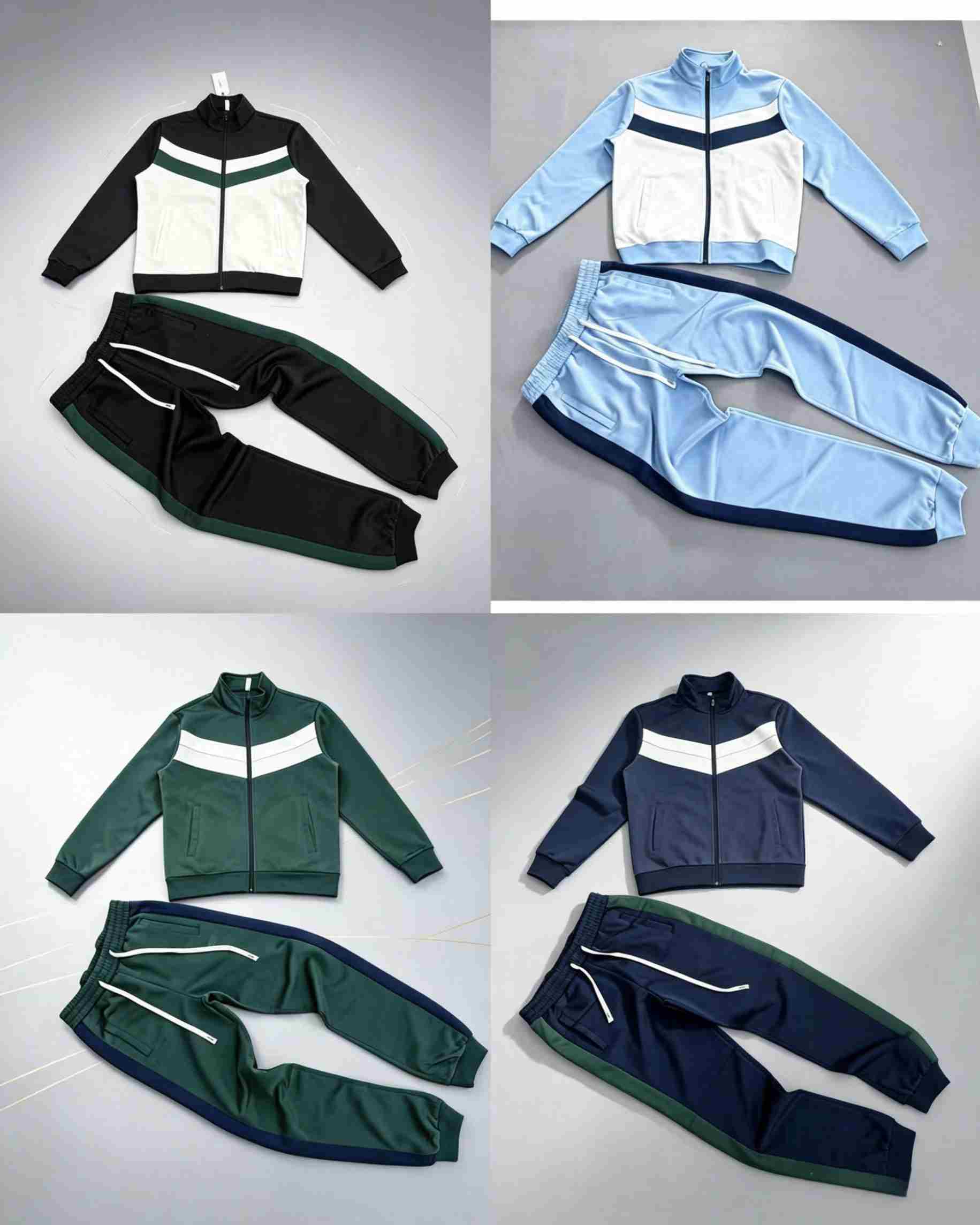
A first winter order should balance practicality and visual variety. A practical opening range can include:
- Dark colors (black, charcoal, navy) for core winter demand
- One or two mid-tones (burgundy, olive, dark grey) for variety
- A clean basic style without extra details
- A style with a hood for higher-altitude markets
- A heavier GSM option for cooler cities
When contacting a supplier, use item numbers and list the quantity for each color and size. This is more precise than saying “send popular colors.” The final color mix should be confirmed against actual stock and your own customer data.
Quality Checks for Heavy Fabric Tracksuits
Inspect the Stitching and Seams
Heavy fabric puts more stress on stitching. Check the shoulder seam, side seam, sleeve join and trouser rise. Look for skipped stitches, loose threads or uneven tension. Reinforced bar tacks at stress points are a good sign of a serious factory.
Check the Lining and Brushing Quality
Open the jacket and feel the inside. The brushing should be even across the entire panel. Patches of smooth fabric inside a “fleece-lined” garment indicate inconsistent production. Compare the sample with the bulk lot when goods arrive.
Test Zipper, Hood Drawstrings and Cuffs
Pull the zipper up and down several times. For hooded styles, pull both drawstrings and confirm they are anchored properly. Check the elastic recovery at the cuffs and waistband.
Measure Both Pieces Against the Size Chart
Compare the sample with the approved size chart. Measure both pieces and check whether the cuffs, hem and trouser legs are even. Small differences can become more visible when the garment is worn, especially in heavier fabrics.
Test Washing and Color Stability
Follow the supplier’s recommended washing instructions. Heavy fabrics can shrink more than lightweight ones, so this check matters. Record shrinkage, color change, pilling and seam movement. Keep the approved sample for comparison.
Confirm the Packing List and Carton Marking
Before shipment, confirm item number, color, size, quantity per polybag, pieces per carton, total carton count and carton marks. Clear packing information helps reduce receiving mistakes at the destination warehouse.

Ready Stock or Custom Production for Winter Tracksuits?
Ready stock is usually suitable when you want to test a product or need faster dispatch. Custom production may allow changes to:
- Logo embroidery or print
- Woven labels and care labels
- Hang tags and polybags
- Fabric composition
- Color and color matching
- Fit adjustments
- Pocket details and zipper type
Custom production can change the MOQ, unit price and lead time. Send all requirements before requesting a final quotation. Do not assume that the terms for ready stock will apply to a custom order.
What to Include in a Winter Tracksuit Inquiry
A complete inquiry helps the supplier respond with useful information. Include:
- Destination country and city
- Product or item number
- Estimated quantity per size and per color
- Required colors
- Required sizes
- Ready stock or custom production
- GSM weight and lining preference
- Logo or packaging requirements
- Target delivery date
- Preferred shipping method
You can use this message:
Hello AfriWear Supply, I am interested in heavy fabric winter men’s tracksuits wholesale. My destination is [country and city]. I need approximately [quantity] sets in [sizes and colors], GSM around [number]. Please confirm the current item numbers, MOQ, wholesale price, size chart, packing details, dispatch or production time, and shipping options.
Winter Tracksuit Wholesale Checklist
Before paying for an order, confirm:
- Product sample approved and labeled for reference
- Fabric composition and GSM weight for both pieces
- Lining type confirmed (brushed, fleece, smooth)
- Size measurements for jacket and trousers
- Color list with reference
- Quantity by color and size
- MOQ per style and per color
- Unit price and currency
- Packing quantity per carton
- Production or dispatch time
- Shipping method and destination cost
- Inspection arrangement
- Payment terms
- Return or quality-claim process
Frequently Asked Questions
What GSM is considered heavy for a winter tracksuit?
Heavy winter tracksuits are typically 280-380 GSM. Fleece-lined sets sit at the higher end of that range. Anything below 280 GSM is usually a transitional or three-season weight rather than a true winter set.
Are heavy tracksuits suitable for African markets?
Yes, but only for specific seasons or climates. Lagos harmattan, Nairobi cool nights, Johannesburg winter and Addis Ababa altitude all support heavier sets. Year-round humid coastal cities are usually better served by lightweight sets.
Can I mix winter and summer styles in one order?
Yes, as long as the supplier confirms the MOQ per style and per color. Mixed orders help a retailer manage seasonal rotation. Confirm packing, labeling and inspection separately for each style.
How do I check GSM before approving a sample?
Ask the supplier for a written GSM statement for the specific lot. You can also weigh a sample piece on a precise scale. Divide the weight in grams by the panel area in square meters to calculate GSM.
What is the typical lead time for winter tracksuits?
Ready stock usually dispatches within 7-15 days after payment. Custom production typically takes 25-35 days. Sea shipping to West Africa adds another 25-40 days; air freight is faster but more expensive.
Request the Current Catalog
The strongest wholesale decision comes from matching a real product specification with a real customer group. Start with a sample, confirm the GSM and lining, and make the first order easy to check.
View the current AfriWear Supply product collection or request the latest catalog and wholesale quotation on WhatsApp.